2026-08-21 · David Ramirez
Why Breakers Trip After Heavy Rain in Spring Texas Neighborhoods
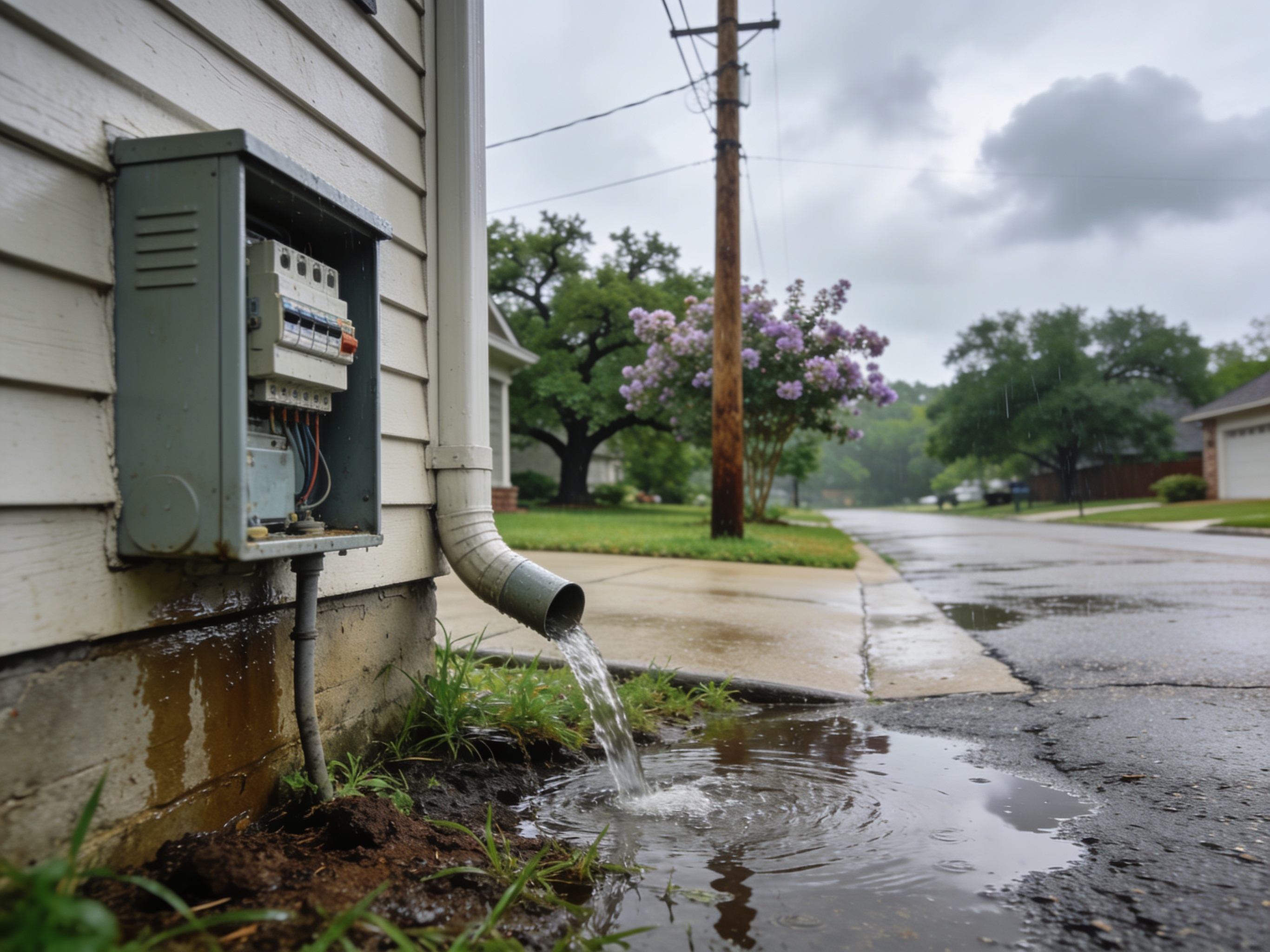
Heavy rain in Spring Texas neighborhoods causes breakers to trip primarily when moisture infiltrates outdoor outlets, panels, or underground wiring runs common in older homes. This issue shows up regularly in areas with humid subtropical climate patterns that bring intense downpours followed by lingering dampness.
How Moisture Enters Electrical Systems After Storms
Spring sits in Harris County where clay-heavy soils and flat terrain allow rainwater to pool around foundations for days. Homes in Old Town Spring Historic District often date back 40 years or more with original wiring that lacks modern waterproofing. When water seeps into exterior junction boxes or service entrances, it creates low-resistance paths that overload circuits and trip breakers within hours of a storm. Underground feeds serving Spring Creek Oaks properties face extra risk because shifting soil during wet periods can crack conduit and let water reach conductors directly.
The same pattern repeats in Imperial Oaks where many homes sit close to drainage ditches that overflow during prolonged rains. Condensation inside panels adds another layer once humidity spikes again after the storm passes. These conditions differ from drier inland areas because the local water table stays high enough to keep ground moisture elevated for weeks.
Local Housing Stock and Wiring Vulnerabilities
Many residences in Old Town Spring and nearby subdivisions still rely on aluminum branch wiring or panels installed before 1990. These materials corrode faster when exposed to repeated moisture cycles typical of the region. Breakers in such panels lose sensitivity over time and may fail to isolate faults cleanly, leading to repeated trips or even arcing. Newer builds in The Woodlands corridor sometimes avoid this through updated grounding, yet older stock near Spring Creek Greenway remains common.
Heavy summer humidity compounds the problem by preventing full drying between rain events. Homeowners notice trips most often on circuits serving outdoor lighting, pool equipment, or garages where GFCI protection has aged or been bypassed. Checking these specific locations first after a storm helps isolate whether the issue stems from water intrusion rather than an overloaded appliance.
Practical Steps Homeowners Can Take
Inspect visible outdoor outlets and covers for standing water or damaged seals right after rain stops. Reset only the affected breaker once everything appears dry and test by running one device at a time. If trips continue on the same circuit, the wiring or panel likely needs professional evaluation rather than repeated resets. Whole-house surge protection can reduce secondary damage from nearby lightning that often accompanies these storms.
For persistent problems, schedule service during business hours Monday through Friday 8am to 6pm or Saturday 9am to 2pm. Technicians familiar with Harris County soil and drainage patterns can trace faults that generic troubleshooting misses.
When Replacement Becomes Necessary
Repeated trips after rain usually signal the need for targeted repairs such as circuit breaker replacement in affected panels. In homes with original wiring, upgrading the main panel prevents future moisture-related failures and brings grounding up to current standards. This work proves especially relevant for properties in Spring Creek Oaks where tree cover keeps shaded areas damp longer.